
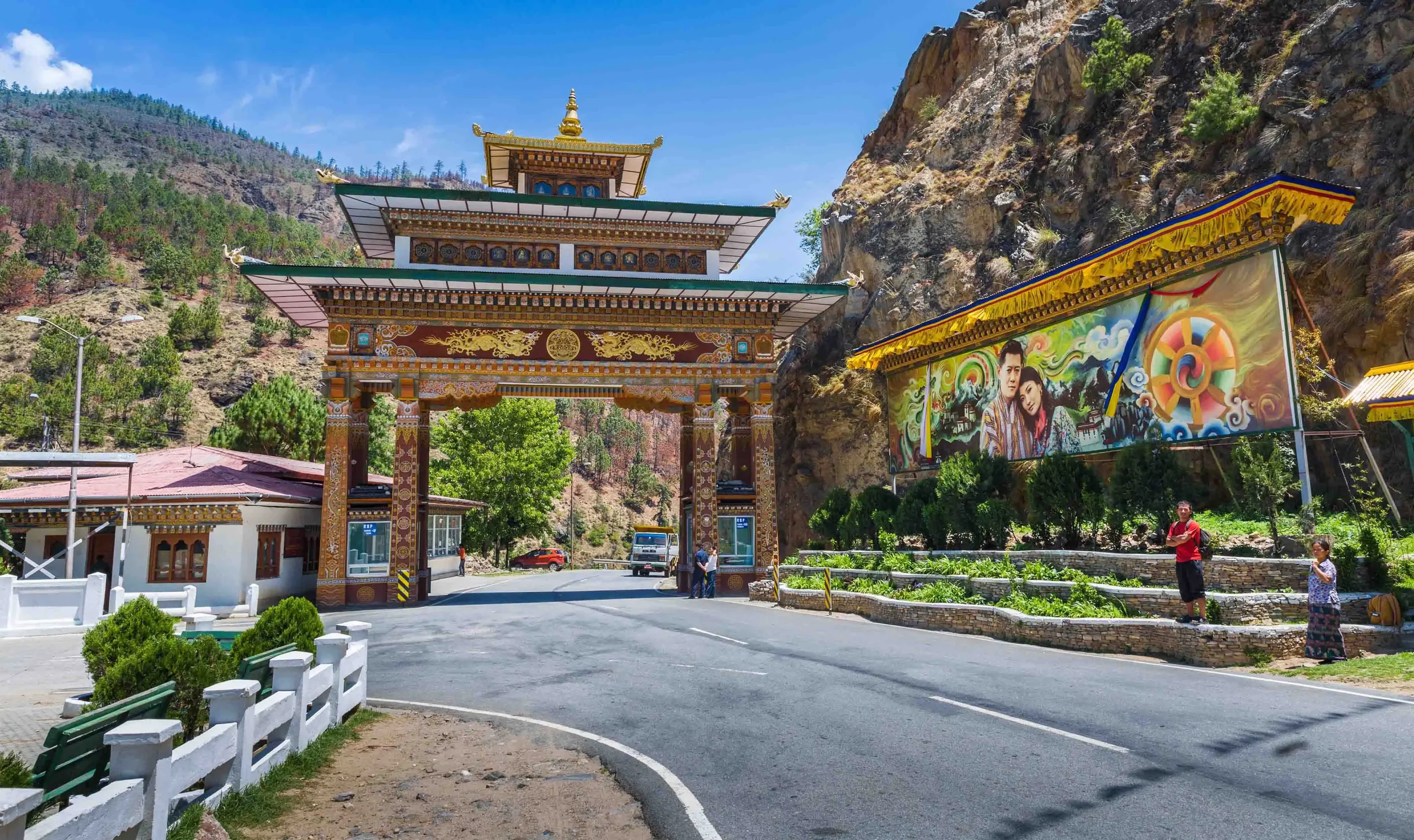
Bhutan Travel Cost 2026: Everything You Need to Know Before You Book
Bhutan does not sell itself cheaply — and that, paradoxically, is part of its charm. Long before the rest of the world discovered that overtourism hollows out the soul of a destination, the Kingdom of Bhutan instituted a policy rooted in a simple but profound philosophy: high value, low volume. Every traveller who crosses into this Himalayan kingdom does so on a foundation of intentional policy — paying a daily fee that funds free healthcare, education, and environmental conservation for Bhutanese citizens.
In 2026, that fee has been restructured, and alongside it, the entire pricing landscape of a Bhutan journey has evolved. Whether you are considering a once-in-a-lifetime private luxury circuit or a carefully curated cultural immersion on a considered budget, understanding the true cost of travelling to Bhutan is the essential first step. This guide — written by the team at Bhutan Peaceful Tours & Treks, a licensed TCB operator based in Thimphu since 2003 — gives you complete transparency on every expense you will encounter.
The Sustainable Development Fee (SDF): What It Is and Why It Matters
The Sustainable Development Fee is Bhutan's most talked-about travel regulation, and also its most misunderstood. It is not a tourist tax in the conventional sense. It is a daily contribution — currently set at USD 100 per person per day — that flows directly into Bhutan's national budget, funding public infrastructure, environmental protection, and the maintenance of the pristine landscapes you have come to experience.
The SDF applies to all international tourists regardless of nationality (with the exception of citizens of India, Bangladesh, and the Maldives, who pay a reduced regional rate). It is mandatory, non-negotiable, and must be booked through a licensed Bhutanese tour operator or their international partners.
What the SDF does NOT cover: accommodation, meals, internal transport, guides, monument entry fees, or airfare. It is a standalone daily levy, additional to the package price your operator will quote you.
For a 7-night trip, you are looking at USD 700 in SDF alone per person. For a couple on a 10-night journey, that is USD 2,000 in SDF before a single hotel night is added. Understanding this from the outset prevents sticker shock and allows you to plan with clarity.
Package Pricing: What Your Tour Operator Charges
Licensed Bhutanese operators structure their pricing as all-inclusive daily rates that encompass accommodation, all meals, a licensed guide, internal transport, and standard monument entry fees. The SDF is usually listed separately or included in a total per-day figure.
At the budget end of the licensed operator spectrum, you can expect packages starting from approximately USD 250–300 per person per day (excluding SDF), covering comfortable 3-star guesthouses, shared transport, and a knowledgeable guide.
Mid-range packages — the most popular category among independent-minded travellers — typically run USD 350–500 per person per day, offering 4-star boutique hotels, private vehicles, and curated cultural experiences.
Luxury packages, which are Bhutan Peaceful Tours & Treks' speciality, begin at USD 600 per person per day and can reach above USD 2,500+ for stays in Bhutan's iconic luxury lodges — properties like Amankora, COMO Uma Paro, Six Senses Thimphu, and Gangtey Lodge. These prices reflect a level of hospitality that rivals anywhere in the world, set against backdrops of unparalleled natural and spiritual beauty.
Flights to Bhutan: The Hidden Cost That Surprises Most Travellers
Druk Air and Bhutan Airlines are the only two carriers authorised to fly into Paro International Airport — one of the world's most dramatic and technically demanding approaches, threading between towering peaks before landing in the valley below. This restricted access keeps flight prices elevated and means availability can be limited during peak seasons.
Return flights from Bangkok (the most common hub) to Paro range from USD 400–700. From Delhi or
Kolkata, fares typically sit at USD 300–550 return. Connections from further afield — London, New
York, Singapore, Doha — require at least one layover, most commonly in Delhi, Kathmandu, or Bangkok, and total airfare can reach USD 900–1,500 for economy class from Western countries.
Booking early — ideally three to six months ahead of travel — significantly improves both price and availability, particularly for festival periods (Paro Tshechu in spring, Thimphu Tshechu in autumn) when seats sell out months in advance.
Accommodation Costs Across the Spectrum
Bhutan's accommodation landscape is among the most diverse and quality-consistent in the Himalayas. At the top of the hierarchy sit the internationally acclaimed luxury lodges — Amankora's five lodges across Paro, Thimphu, Punakha, Gangtey, and Bumthang command above USD 2,500 per night for a suite, inclusive of most meals and guided experiences. Six Senses Bhutan offers a similar ultra-luxury experience at comparable rates.
For those seeking luxury without the ultra-premium price tag, a wealth of exquisite boutique properties — Zhiwa Ling Heritage Hotel, Naksel Boutique Hotel, Hotel Druk, Pemako Punakha — offer sumptuous rooms and world-class service at USD 200–450 per night.
Mid-range guesthouses and heritage farmhouses, which are a particular highlight of travelling in Bhutan's valleys, run USD 80–180 per night and often provide a more intimate, locally immersive experience than any five-star property can replicate.
For budget travellers, simple but clean guesthouses are available in Paro, Thimphu, and Punakha from USD 30–60 per night, though the obligatory use of a licensed tour operator means most travellers access accommodation as part of a negotiated package rather than booking independently.
Dining Costs: From Ema Datshi to Fine Dining
Bhutanese cuisine is a revelation for most visitors. The national dish — ema datshi, a fiery broth of chilli peppers and local cheese — costs almost nothing in a local restaurant but is one of the most memorable meals you will eat anywhere in Asia. A full meal at a local eatery in Thimphu runs USD 5–12. At a hotel restaurant serving both Bhutanese and international cuisine, expect USD 15–35 per person for a three-course dinner. The fine dining restaurants at luxury lodges can command USD 60–100 per person for a tasting menu, often featuring foraged ingredients and wines flown in from curated European cellars.
Budget Summary: Total Cost Estimates for Common Trip Lengths
To give you a grounded sense of what a Bhutan trip costs at various levels, here are realistic all-in estimates (per person, excluding international flights) for common journey lengths:
7 nights / 8 days – Budget: USD 2,800–3,500 | Mid-range: USD 4,200–5,500 | Luxury: USD 8,000–14,000 10 nights / 11 days – Budget: USD 4,000–5,000 | Mid-range: USD 6,000–8,000 | Luxury:
USD 12,000–20,000 14 nights / 15 days – Budget: USD 5,500–7,000 | Mid-range: USD 8,500–11,000 |
Luxury: USD 17,000–28,000
These figures include SDF, accommodation, all meals, guide, transport, and monument entry fees.
International flights, travel insurance, personal shopping, and bar tabs are additional.
Frequently Asked Questions
-
Yes, by design. The Sustainable Development Fee and mandatory licensed operator requirement mean Bhutan is significantly pricier than Nepal or India, but this cost directly funds conservation and community welfare — making it arguably the most responsibly priced destination in the region.
-
No. All international tourists (excluding citizens of India, Bangladesh, and the Maldives) must book through a licensed Bhutanese tour operator or an internationally appointed agent. This is a legal requirement, not optional.
-
No. The SDF is a standalone daily levy. Accommodation, meals, flights, guides, and transport are separate costs, typically bundled into your operator's package price.
-
June, July, and August (monsoon season) see reduced package prices as tourist numbers drop.
However, some treks become inaccessible and leeches are a nuisance on forest trails.
-
Package prices are often negotiable, particularly for longer stays, larger groups, or repeat visitors.
The SDF, however, is a fixed government fee and cannot be reduced.
Ready to Begin?
Ready to plan your Bhutan journey with complete transparency on pricing? Contact Bhutan Peaceful Tours & Treks for a personalised, no-obligation quote tailored to your dates, interests, and accommodation preferences. As a licensed TCB operator and Serandipians DMC partner with over two decades of experience, we craft journeys where every dollar spent becomes a memory worth infinitely more.