
Best Time to Visit Bhutan: A Complete Month-by-Month Guide for 2026
Bhutan does not have a single best season — it has four distinct seasons, each revealing a different face of the kingdom. The Bhutan that greets you in October, draped in amber and gold beneath a crystalline sky, is an entirely different country from the Bhutan of March, when jacaranda and rhododendron blaze along every hillside. The midwinter Bhutan of December — cold, quiet, and hauntingly still — holds a particular magic for those who prefer solitude over spectacle.
This guide, written by the team at Bhutan Peaceful Tours & Treks from our offices in Thimphu where we have watched twenty-two years of seasons turn, gives you the honest, nuanced information you need to choose the timing that matches your priorities — whether that is festival attendance, trekking conditions, luxury comfort, wildlife observation, or simply avoiding the crowds.
Spring: March to May — The Season of Festivals and Flowers
Spring is arguably Bhutan's most celebrated season, and for good reason. The temperatures are mild and gentle — daytime highs of 15–22°C in the valleys — the skies are reliably clear after the long winter, and the landscape erupts in colour as rhododendrons (Bhutan has over 46 species) bloom across the hillsides in waves of pink, red, and white.
Most importantly for those chasing cultural experiences, spring hosts some of Bhutan's most spectacular festivals. The Paro Tshechu — held in the magnificent fortress valley of Paro, usually in late March or early April — is the country's most famous festival, drawing pilgrims and travellers from across the world to witness the unfurling of the Thongdrel (a giant sacred tapestry) at dawn, followed by days of masked chham dances in the dzong courtyard.
Spring is also peak season for trekking. The Druk Path trek, the Jhomolhari Base Camp trek, and the Bumdra Camping trek are all at their finest in April and May, with stable weather and extraordinary high-altitude wildflower displays.
Expect peak pricing and earlier booking requirements (3–6 months ahead for festival periods). Tiger's Nest trail can be crowded on weekends in April, so build in a weekday visit if possible.
Summer / Monsoon: June to August — Green, Lush, and Surprisingly Rewarding
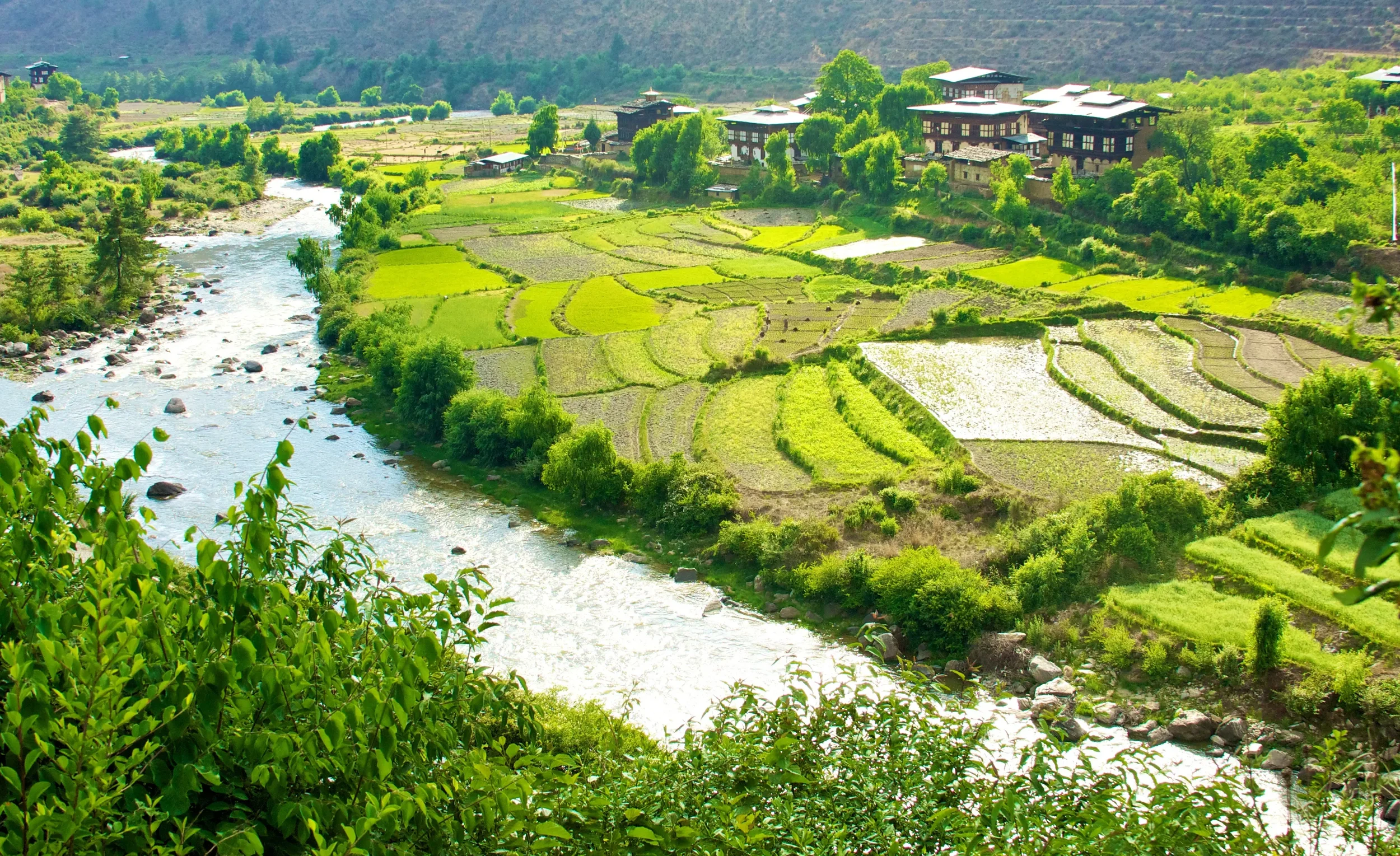
The monsoon arrives in Bhutan in June, bringing mist, rain, and a verdant intensity to the landscape that no other season can match. The hills turn a saturated, electric green. Waterfalls multiply exponentially down every valley wall. The rice paddies, terraced along slopes throughout the country, fill and shimmer with life.
The monsoon is Bhutan's least visited season — which, for independent-minded travellers, is precisely its appeal. Hotels are less booked, prices are often lower, and the kingdom feels closer to its daily, unhurried self rather than performing for an audience.
Some practical notes: leeches are common on forest trails after rain (they are harmless but startling). Some of the higher trekking routes, particularly in Haa and the far east, become muddy and technically challenging. The mountains are frequently cloud-covered, so those seeking Himalayan panoramas may be disappointed.
However, the valleys — Paro, Punakha, Bumthang — remain accessible and beautiful throughout the monsoon, and cultural sites are entirely unaffected by the rain. The Haa Summer Festival, celebrating nomadic culture in the remote Haa Valley, takes place in July and is one of Bhutan's most authentic and lesser-visited celebrations.
Autumn: September to November — The Classic Season
If you ask any experienced Bhutan guide which season they would recommend above all others, most will say October without hesitation. Autumn in Bhutan is as close to perfect as weather gets in the Himalayas.
The monsoon clears in September, leaving the air scrubbed clean and the sky an improbable, saturated blue. Temperatures are ideal — warm enough in the valleys for shirtsleeves in the afternoon, cool enough in the mornings and evenings to appreciate a fire in the lodge. The views are extraordinary: from Dochula Pass, on a clear October morning, you can count 108 stupas against the snowcapped backdrop of the Black Mountains.
October and November host some of Bhutan's most important festivals: the Thimphu Tshechu (the capital's great masked dance festival), the Wangdue Phodrang Tshechu, the Jakar Tshechu in the Bumthang valley, and the Black-Necked Crane Festival in Phobjikha in November — a deeply moving event celebrating the arrival of the endangered cranes from Tibet for their winter sojourn.
Trekking conditions in autumn are exceptional — the Snowman Trek, Bhutan's ultimate high-altitude challenge, is only reliably feasible in October. Book as early as six months ahead for October travel.
Winter: December to February — Cold, Quiet, and Extraordinarily Beautiful
Winter in Bhutan is underrated and undervisited — which makes it, for certain travellers, the most rewarding time of all. Yes, it is cold: nighttime temperatures in the valleys drop to 0–5°C, and higher-altitude areas see significant snowfall. But the dzongs, monastery courtyards, and mountain roads draped in snow are among the most striking images this country can offer.
The black-necked cranes are in residence in Phobjikha Valley through January, making winter the best time to observe them at length. The hot springs at Gasa (Khambalung) and Duenmang are at their most welcome in winter. And the Tsechu festivals in Trongsa and Punakha (held in February/March) draw dense local attendances, with far fewer international visitors than the spring equivalents.
For luxury travellers who value privacy, intimacy, and the sense of having a country largely to themselves, winter is a genuinely compelling choice.
Frequently Asked Questions
-
October and April offer the finest conditions — clear skies, good trail conditions, and comfortable temperatures for the hike.
-
June through August (monsoon) typically sees the lowest airfares and package prices.
-
Absolutely. Winter travel is beautiful, peaceful, and offers excellent value. Pack warm layers — mornings and evenings are cold, but daytime in the valleys is often mild and sunny.
-
Paro Tshechu 2026 falls in late March / early April — confirm exact dates with your operator as the Bhutanese lunar calendar determines the precise days each year.
-
Yes — roads remain open, cultural sites are fully operational, and the landscape is strikingly beautiful.
Trekking is more challenging but not impossible.
Ready to Begin?
Bhutan is extraordinary at every season — the question is which extraordinary suits you best. Speak to the team at Bhutan Peaceful Tours & Treks and we will match your ideal dates to the perfect itinerary, including current festival calendars and accommodation availability.